Why latency defines the edge
In the world of solana high-frequency defi trading infrastructure, the alpha isn't just in the strategy—it's in the speed of execution. While traditional finance relies on microseconds to gain an advantage, Solana's architecture demands a different approach. The blockchain's high throughput means that opportunities appear and vanish in milliseconds. If your infrastructure can't keep up, you're not just losing trades; you're losing the edge entirely.
Consider the difference between a standard public RPC endpoint and a dedicated HFT node. A typical public request might take 40 milliseconds or more due to network congestion and shared resources. In contrast, a dedicated Solana trading node can deliver responses in under 4 milliseconds. This isn't just a performance tweak; it's the difference between capturing a profitable arbitrage and watching it disappear into the mempool.
This latency gap is where the real battle is fought. A standard node is like driving on a public highway during rush hour—unpredictable and slow. A dedicated HFT node is a private tunnel, bypassing the congestion to get you to your destination instantly. For algorithms that scan for price discrepancies across multiple DEXs, those few milliseconds are the only thing separating a win from a loss.
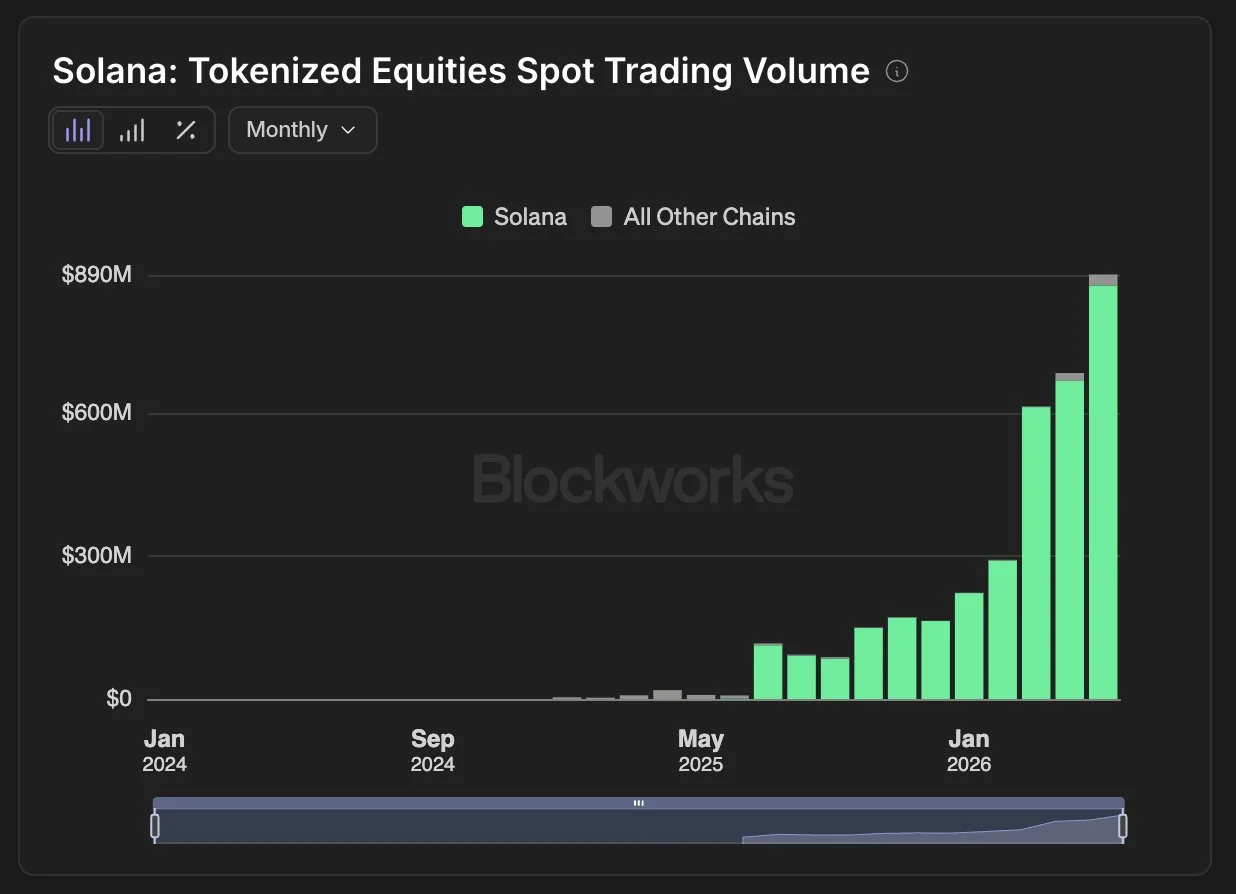
The volume on Solana's decentralized exchanges reflects this intensity. With DEX volumes surging to $143 billion, driven by high-frequency trades and memecoin frenzies, the need for speed has never been more critical. Infrastructure isn't a support function here; it's the primary competitive advantage. Building robust solana high-frequency defi trading infrastructure means prioritizing direct, low-latency access to the blockchain above all else.
Selecting dedicated RPC and validator nodes
Building Solana high-frequency DeFi trading infrastructure starts with the connection. Standard public RPC endpoints are useless for HFT; they throttle requests, introduce unpredictable latency, and prioritize retail traffic over algorithmic precision. To compete, you need dedicated access that bypasses the public queue entirely.
The foundation of this setup is Stake-weighted Quality of Service (SWQoS). This protocol prioritizes transactions from validators and RPC providers that have significant stake in the network. By running your own validator or connecting to a provider with high stake weight, your transactions are processed faster during network congestion. This isn't just about speed; it's about survival in a mempool where milliseconds determine profit or loss.
Proximity matters as much as protocol. Bare metal servers located in the same data center as the Solana cluster's primary validators reduce physical transmission time. Every hop through a public internet exchange adds jitter. For Solana high-frequency DeFi trading infrastructure, you want a direct fiber or private network link. This minimizes the variance in transaction submission times, ensuring your strategies execute when intended, not when the network feels like it.
Transaction ordering is the final piece. In high-frequency trading, being first isn't enough; you must be first in line. Dedicated nodes allow you to control the ordering of your transactions relative to others. By submitting directly to validators with low latency, you avoid the delays inherent in public RPC relays. This control is critical for strategies like arbitrage, where being second means missing the opportunity entirely.
The market environment for these strategies is volatile. Understanding price action helps contextualize the urgency of low-latency infrastructure.
Structuring the execution stack
Building a solana high-frequency defi trading infrastructure requires moving beyond standard RPC endpoints. Retail tools often fail under the latency and throughput demands of HFT, where every millisecond counts. To compete, you need a stack designed for direct market access, custom serialization, and robust MEV protection.
Standard JSON-RPC calls introduce significant latency due to network hops and queue processing. For HFT, you must establish a direct connection to a validator, preferably one co-located in the same data center. This bypasses intermediary nodes and reduces the time between transaction submission and block inclusion. Use UDP-based streaming (QUIC) to receive slot updates and block metadata in real-time, allowing your system to react to on-chain events before the block is even finalized.
| Component | Retail Setup | HFT Infrastructure |
|---|---|---|
| Connection | Public RPC Endpoint | Co-located Validator (QUIC) |
| Latency | 50-200ms | <10ms |
| Data Feed | Polling/HTTP | Live Slot/Block Stream |
| MEV Exposure | High (Public Mempool) | Low (Private/Protected) |

Solana’s transaction size limits and computational costs mean every byte matters. Standard SDK serialization can be inefficient for high-frequency strategies. Implement custom transaction builders that minimize padding and optimize instruction layout. Use parallel transaction processing by grouping independent instructions to maximize compute unit utilization. Pre-calculate signatures and use efficient account lookup tables to reduce transaction size, ensuring your orders fit within the block’s compute budget without triggering rejection or excessive fees.
MEV bots are prevalent on Solana, often front-running or sandwiching trades. To protect your infrastructure, use private transaction channels like Jito’s tip streams or Flashbots Protect equivalents. These services bundle your transactions with tips to validators, ensuring they are included without being visible to the public mempool. Alternatively, implement delay mechanisms or use encrypted mempools to hide your intent until execution. This prevents other bots from detecting your order and acting against it.
HFT infrastructure is not set-and-forget. Continuously monitor latency, success rates, and slippage. Use real-time metrics to adjust your connection parameters, serialization strategies, and MEV protection settings. Regularly audit your code for bottlenecks and update your validator connections as the network topology changes. A production-grade system requires constant tuning to maintain its edge.
Managing risk and capital efficiency
High-frequency trading on Solana moves fast, but speed without guardrails is just a faster way to lose capital. In this infrastructure, risk management isn't an afterthought; it is the engine that keeps the system running. You need to protect profits in volatile DeFi markets by treating every transaction as a potential liability until it is settled.
Slippage control and transaction safety
Slippage tolerance is your first line of defense. On Solana, network congestion can cause transactions to fail or execute at unfavorable prices if you don't set strict limits. Use dynamic slippage settings that adjust based on real-time pool depth and volatility. If the market moves against you by more than your threshold, the trade should fail silently rather than execute at a loss. This "fail-safe" approach is critical for maintaining capital efficiency.
Capital allocation and position sizing
Divide your trading capital into smaller, independent units. Never deploy your entire bankroll on a single strategy or pair. This ensures that a single bad trade or a temporary liquidity crunch doesn't wipe out your account. Rebalance frequently to maintain your target exposure. For Solana HFT, this means monitoring your SOL balance closely, as transaction fees (rent) can eat into small positions if not accounted for in your profit calculations.
Real-time market monitoring
You cannot manage what you cannot see. Use live data feeds to track price movements, liquidity depth, and network health. A drop in liquidity or a spike in transaction fees can signal an immediate need to pause trading. Stay alert to on-chain events that might impact your trading pairs, such as large token transfers or protocol upgrades.
Checklist for risk management
-
Set strict slippage tolerance for each trading pair
-
Implement dynamic position sizing based on volatility
-
Monitor real-time network congestion and fees
-
Pause trading during unexpected on-chain events
-
Rebalance capital regularly to maintain target exposure
Helpful gear
Use these product recommendations as a starting point, then choose the size, material, and price point that fit how you actually use the gear.

As an Amazon Associate, we may earn from qualifying purchases.
No comments yet. Be the first to share your thoughts!