Why Solana Fits High-Frequency Trading
High-frequency trading (HFT) demands two things that most blockchains struggle to provide simultaneously: speed and cheapness. Solana delivers both by design, making it a rare fit for strategies that rely on executing thousands of transactions in seconds without eroding margins on gas fees.
The core advantage lies in Solana’s architecture. Unlike Ethereum, which processes transactions sequentially through a single main chain, Solana uses a parallel execution model. This allows it to handle up to 65,000 transactions per second (TPS) under ideal conditions, with block times averaging around 400 milliseconds. For an HFT bot, that speed translates to lower latency and faster settlement, critical for arbitrage and market-making strategies.
Cost is the second pillar. On EVM chains, a single swap during high congestion can cost dozens of dollars. On Solana, the average transaction fee is a fraction of a cent. This negligible cost structure allows traders to deploy high-frequency strategies that would be economically unviable on slower, more expensive networks.
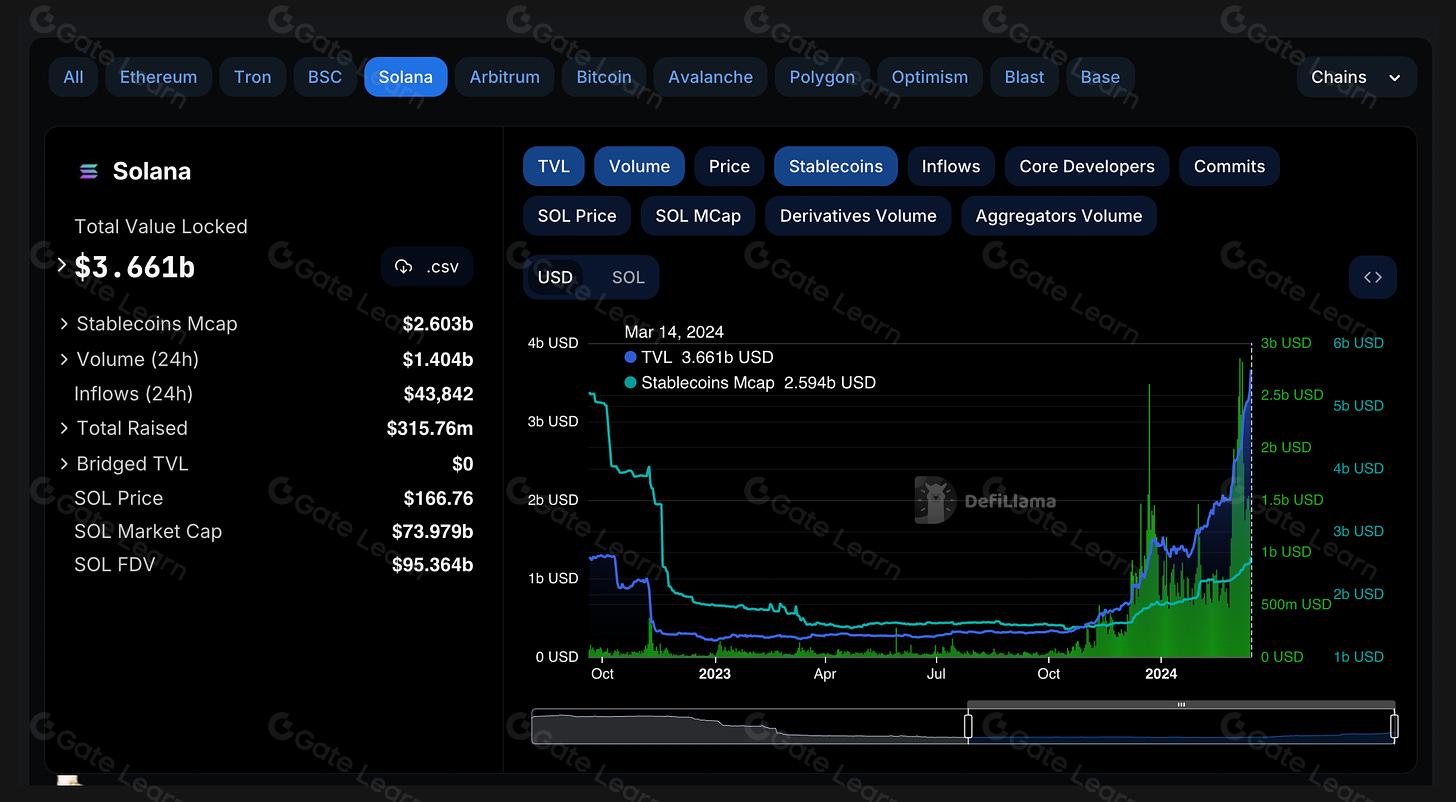
This combination of throughput and low cost has driven significant volume to Solana’s decentralized exchanges (DEXs). Recent data shows weekly trading volumes on Solana DEXs surpassing $20 billion, a testament to the infrastructure’s ability to handle serious trading activity.
While no blockchain is perfect, Solana’s technical foundation addresses the primary bottlenecks that historically prevented HFT from thriving in DeFi. The infrastructure is built for speed, and the market is responding.
The Infrastructure for Sub-50ms Execution
High-frequency trading on Solana demands a technical stack built for speed. Standard public RPC nodes often introduce latency that kills edge. To execute trades in under 50 milliseconds, you need a specialized infrastructure that bypasses public network congestion and offers direct access to the chain's execution layer.
Private RPC Nodes and Private Mempools
The foundation of any HFT strategy is a private RPC node. These nodes provide dedicated resources, ensuring consistent block submission rates without competing with general user traffic. By connecting directly to validator infrastructure, traders reduce the round-trip time for transaction broadcasting.
Equally important is access to a private mempool. Public mempools are visible to everyone, allowing arbitrage bots to front-run your orders. Private mempools keep your pending transactions hidden from the public eye until they are ready to be included in a block. This secrecy is essential for executing strategies like liquidations or arbitrage without giving away your hand.
Ephemeral Rollups: MagicBlock
For the most aggressive latency requirements, ephemeral rollups like MagicBlock offer a significant advantage. These solutions create temporary, high-speed execution environments that settle on Solana. MagicBlock delivers sub-50ms latency with first-come-first-served (FCFS) sequencing, mimicking the speed of centralized exchanges.
By processing transactions off-chain in a controlled environment before final settlement, these rollups eliminate the variability of public block times. This approach provides predictable costs and faster confirmation, making it the preferred choice for firms competing on pure speed.
Hardware and Colocation
Software optimizations mean little if the physical distance to the network is too great. Top HFT firms collocate their servers in data centers near Solana validators. This physical proximity reduces the time it takes for data to travel through fiber optic cables, shaving critical milliseconds off execution times.
Combining collocated hardware with private RPCs and ephemeral rollups creates a robust stack. This infrastructure allows traders to react to market changes faster than competitors relying on standard setups. The goal is to minimize every variable that introduces delay, from network hops to block inclusion time.
Top DEX aggregators and routing tools
For high-frequency trading on Solana, the execution layer is where alpha is either preserved or leaked. You are not just choosing an exchange; you are choosing a router. The difference between a standard swap and a high-frequency strategy lies in how efficiently the aggregator finds the best path through fragmented liquidity.
Jupiter is the dominant liquidity router for the chain, pulling quotes from every major DEX to find the optimal split. It is the default engine for most sophisticated Solana traders because it handles the complexity of cross-DEX routing automatically. For HFT, Jupiter’s API allows for programmatic access to these routes, ensuring that slippage is minimized even during volatile market conditions. Jupiter continuously updates its routing algorithms to prioritize speed and cost-efficiency, making it the backbone of most Solana DeFi activity.
However, relying solely on the primary aggregator can sometimes miss niche liquidity pockets or specific MEV-protected routes. Other aggregators and specialized routing tools offer complementary advantages. Some focus on lower latency for specific token pairs, while others provide deeper liquidity for less common assets. Understanding the strengths of each tool allows you to build a more resilient trading infrastructure.
The following comparison highlights the key differences between the primary execution layers used in Solana DeFi.
| Aggregator | Latency Profile | Liquidity Depth | API Complexity |
|---|---|---|---|
| Jupiter | Low (Optimized) | Maximum (Chain-wide) | Moderate (REST/WS) |
| 1inch Fusion | Medium | High (Cross-chain) | High (Complex) |
| Kraken DEX | Low (Native) | Medium (Solana-native) | Low (Simple) |
| Raydium CPMM | Low (Direct) | Medium (Concentrated) | Low (Direct) |
Hardware wallets for secure key management
When you are running high-frequency trading bots on Solana, your private keys are the single point of failure. A hardware wallet keeps those keys offline, ensuring that even if your trading rig is compromised, your capital remains safe. For HFT infrastructure, you need devices that support Solana natively or via trusted third-party apps like Phantom or Backpack, and that can handle rapid transaction signing without becoming a bottleneck.
The Ledger Nano X and Trezor Model T are the industry standards for cold storage. Both devices have robust Solana support, allowing you to sign transactions securely while keeping your keys isolated from the internet. Ledger’s integration with the Solana ecosystem is particularly mature, offering seamless compatibility with major Solana wallets. Trezor’s open-source firmware provides an additional layer of transparency for security-conscious traders.


As an Amazon Associate, we may earn from qualifying purchases.
For traders who prioritize maximum isolation, air-gapped devices like the Keystone Pro offer a different approach. These wallets communicate via QR codes rather than USB or Bluetooth, eliminating any wireless attack surface. While this adds a slight friction to the signing process, it provides the highest level of security for large HFT capital reserves. Choose the device that best balances your need for speed with your risk tolerance.
Setting up your trading workflow
Building a high-frequency trading environment on Solana requires more than just a wallet; it demands a secure, low-latency infrastructure. The goal is to minimize the time between signal detection and transaction submission while keeping your private keys isolated from the execution layer.
Generate a dedicated hot wallet for trading. Never use your primary storage wallet for active bot operations. Use hardware wallets or multi-signature setups for long-term holdings, and keep only the capital needed for immediate trading in the hot wallet. This limits exposure if the execution environment is compromised.
Public RPC endpoints are too slow and rate-limited for high-frequency strategies. Subscribe to a premium RPC provider like Helius, Triton, or QuickNode that offers dedicated endpoints with high throughput and low latency. Ensure your node supports getProgramAccounts and fast transaction simulation for accurate order execution.
Select a framework that supports direct Solana RPC interaction. Open-source options like Jupiter’s CLI or custom Rust/Node.js bots allow you to control the entire pipeline. Configure your bot to monitor the mempool or specific program accounts for liquidity changes, ensuring you react faster than retail traders.
Before sending any transaction, your workflow must include gas fee estimation, slippage tolerance checks, and contract verification. Use a local simulation of the transaction to validate expected outcomes without broadcasting. This prevents costly failed transactions and ensures you are interacting with the correct smart contract addresses.


As an Amazon Associate, we may earn from qualifying purchases.
Common questions about Solana HFT
High-frequency trading on Solana moves fast, but the infrastructure choices matter just as much as the execution speed. Here are the most frequent questions about tools, costs, and risks.
What is the best router for Solana HFT?
Jupiter is the standard liquidity router for the chain. It pulls quotes from every DEX to find the best price. For HFT, its API allows for complex swap strategies and split orders that maximize slippage protection across the Solana ecosystem.
How do I get sub-50ms latency on Solana?
Standard Solana blocks can introduce unpredictable delays. MagicBlock’s Ephemeral Rollups solve this by delivering CEX-speed trading with sub-50ms latency. They offer predictable costs and first-come-first-served (FCFS) sequencing, which is critical for maintaining edge in competitive markets.
What are the hidden costs of HFT on Solana?
While base transaction fees are negligible, HFT strategies generate high volume. Network congestion can spike priority fees. Additionally, using specialized infrastructure like MagicBlock or dedicated RPC nodes adds operational costs. Always factor in these infrastructure expenses when calculating your expected profit margins.
Is Solana HFT safe from MEV?
Solana’s architecture reduces some MEV risks compared to Ethereum, but front-running still exists. Using FCFS sequencing via rollups and ensuring your transactions are routed through reputable, private RPC providers helps mitigate these risks. Always audit your transaction payloads before submission.
No comments yet. Be the first to share your thoughts!