Why latency defines your P&L
In Solana high-frequency trading, your strategy logic is only half the battle. The other half—often the deciding factor between profit and loss—is infrastructure speed. You can have the most sophisticated arbitrage algorithm in the world, but if your transaction takes 200 milliseconds to reach the validator, you’ve already lost. Latency isn’t just a technical metric; it is your P&L.
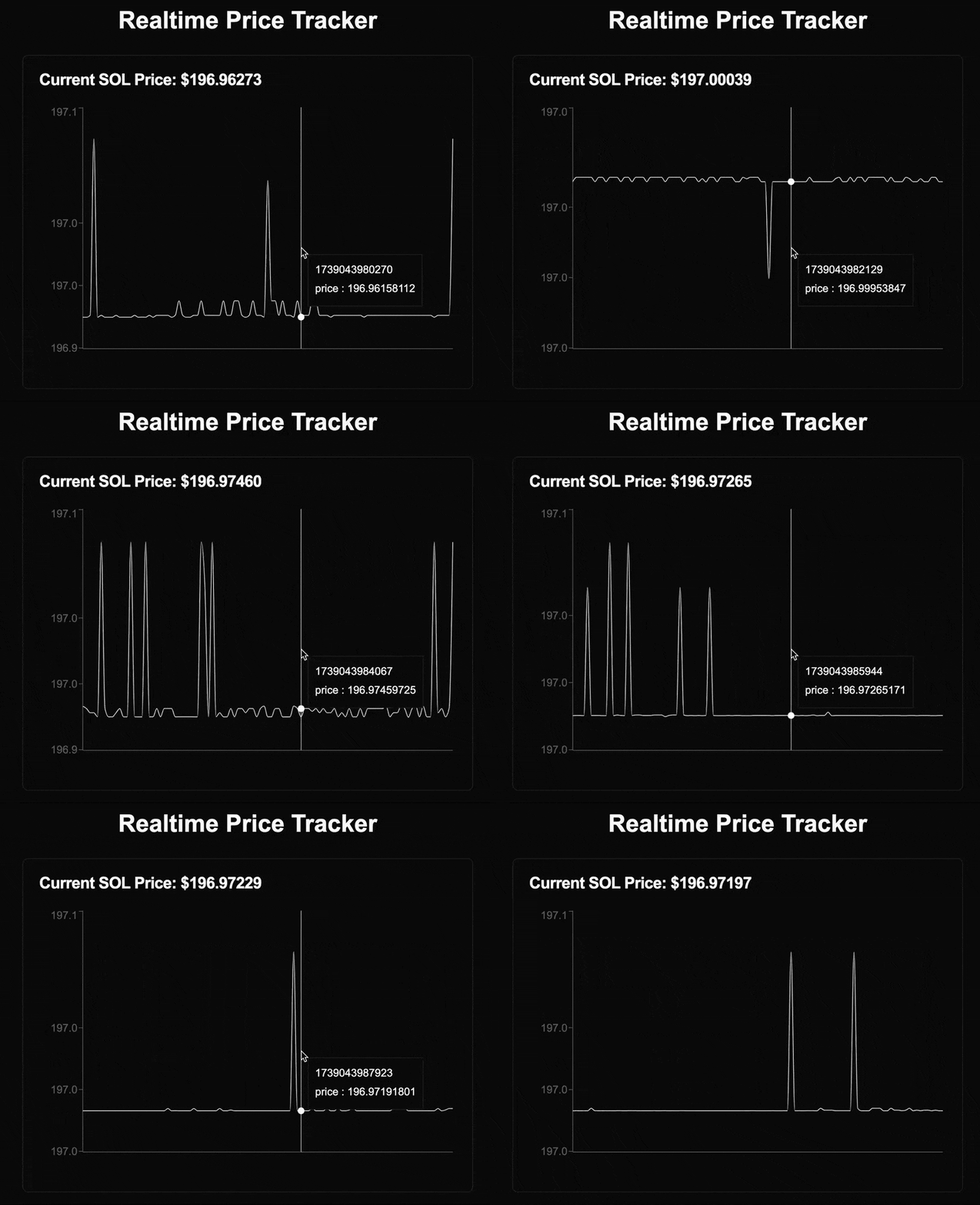
Solana’s architecture is built for speed, with block times around 400 milliseconds and finality in seconds. This creates a narrow window for action. In this environment, sub-50ms latency is the new baseline for competitive trading. If your node is slower than your competitors, you are trading on stale data, effectively betting with yesterday’s prices. The difference between a 10ms and a 50ms round trip can mean the difference between capturing an arbitrage opportunity or watching someone else take it.
This is why "fast" nodes that look good in benchmarks often fail in production. Real-world performance depends on kernel bypass networking, co-located servers, and optimized transaction serialization. It’s not about writing faster code in isolation; it’s about reducing the physical and logical distance between your signal and the blockchain.
Note: Latency isn’t just numbers. It’s your P&L. Sub-50ms latency is the new baseline for competitive HFT on Solana.
To stay competitive, you must treat infrastructure as a first-class strategy component. This means monitoring your node’s performance in real-time, not just after the fact. A small improvement in latency can compound into significant gains over thousands of trades.
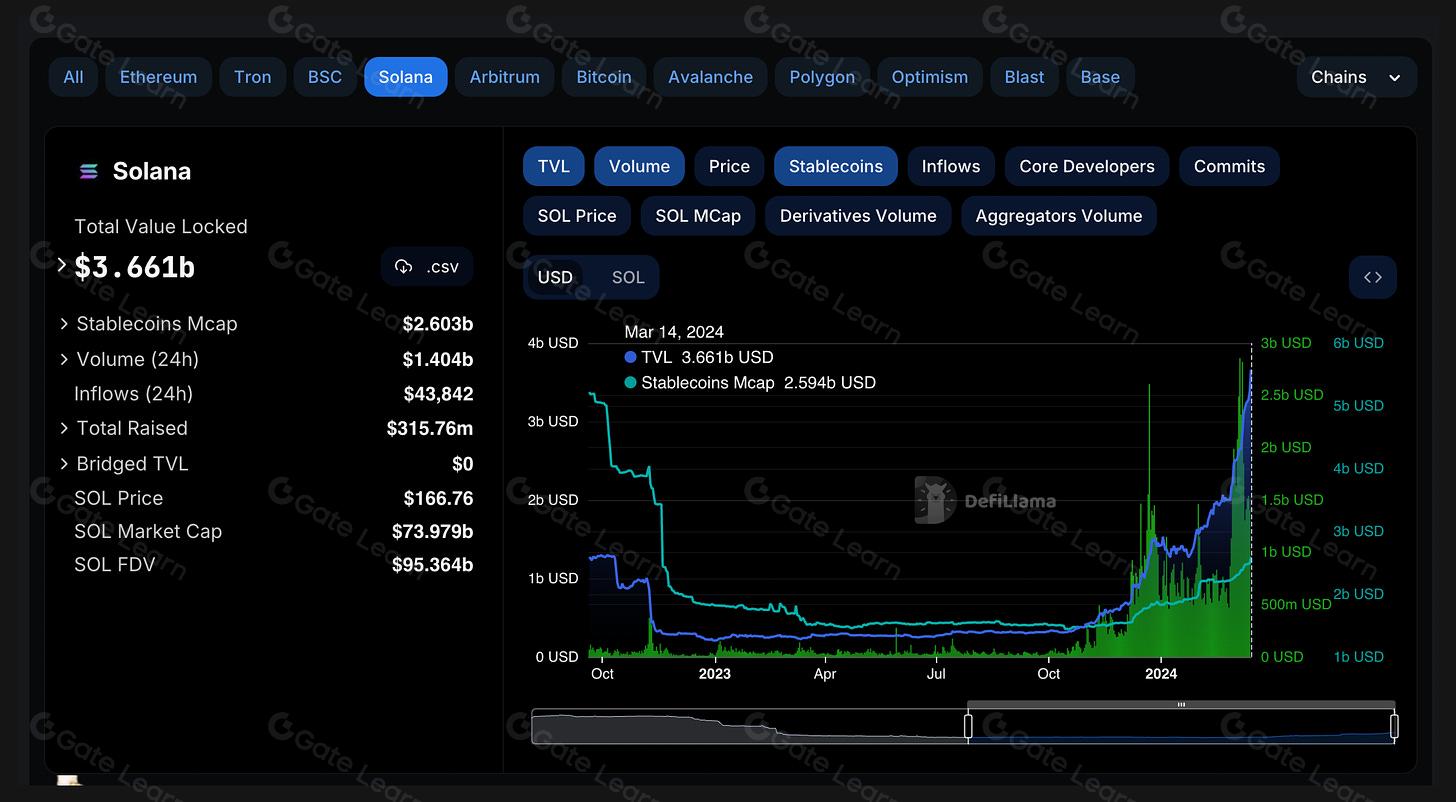
The chart above shows the volatility of Solana. High volatility creates opportunities, but it also increases the risk of being front-run if your infrastructure lags. Speed allows you to react to these movements before the market adjusts, turning volatility into profit rather than risk.
Focus on building a robust, low-latency stack from the ground up. Every millisecond counts in Solana HFT, and your infrastructure is the engine that drives your profitability.
Optimizing your RPC and node setup
Latency is the silent killer of high-frequency trading (HFT) strategies. In a market where profits are measured in milliseconds, the default public RPC endpoints provided by Solana are often too slow and unstable for serious execution. To compete, you need to build infrastructure that minimizes the distance between your code and the blockchain.
Dedicated RPC Endpoints
Public nodes are shared resources, meaning your transaction requests compete with thousands of other users. During high volatility, these nodes often drop requests or delay responses, causing missed opportunities. A dedicated RPC endpoint gives you a private channel with guaranteed uptime and higher throughput limits. This ensures your trade signals reach the network without being queued behind public traffic.
Colocation and Block Engines
Even with a dedicated node, network distance matters. Top-tier HFT firms often use colocation services to place their servers in data centers physically closer to Solana validator clusters. Some strategies go further by connecting directly to block engines, which act as intermediaries that sequence transactions. This setup allows for "first-come, first-served" ordering, reducing the risk of your trade being front-run or delayed by the broader network congestion.
Infrastructure Costs vs. Performance
Building this level of infrastructure requires significant investment. Dedicated nodes and colocation services come with higher monthly fees than standard hosting. However, for HFT, the cost of latency often exceeds the cost of the hardware. The goal is to find the sweet spot where infrastructure expenses are justified by the reduction in missed trades and slippage.
Execution Strategies for Low-Latency Alpha
High-frequency trading on Solana isn't about predicting the future; it's about reacting to the present faster than anyone else. The network's 400ms block time creates a unique environment where speed is the primary asset. Instead of trying to front-run users—a practice that is both ethically fraught and increasingly difficult due to improved MEV protection—you can focus on strategies that benefit from rapid state changes.
Arbitrage Across Pools
Arbitrage remains the most straightforward application of Solana's speed. When a large trade occurs on one decentralized exchange (DEX), it temporarily skews the price. A bot can detect this discrepancy and execute trades on other pools to capture the difference before the market corrects itself. This requires low-latency connections and efficient code, but the logic is simple: buy low, sell high, repeat.
MEV-Protected Trading
Maximal Extractable Value (MEV) has historically been a risk for traders on Solana, with bots often sandwiching legitimate trades to profit from slippage. However, newer infrastructure and strategies now allow for MEV protection. By using services that bundle transactions or employing private RPC endpoints, traders can execute their orders without exposing them to the public mempool, ensuring they get the price they expected.
Market Making
Market making involves providing liquidity to DEXs and earning fees from the spread. On Solana, the low transaction costs make this viable even for smaller positions. The challenge is managing inventory risk and ensuring your bots can react to volatility. Successful market makers often use adaptive algorithms that adjust their spread and order sizes based on real-time market conditions.
TechnicalChart symbol="BINANCE:SOLUSDT" chartStyle="candle" interval="1H" indicators='["volume"]' />
Comparing DEX infrastructure for speed
When trading Solana DeFi at high frequency, the choice of decentralized exchange (DEX) infrastructure matters as much as the strategy itself. You need a venue that minimizes latency and maximizes liquidity depth to execute trades before the market moves. Not all DEXs are built for speed.
Here is how the top contenders stack up against each other for HFT workflows:
| DEX | Latency | Fees | Liquidity Depth |
|---|---|---|---|
| Jupiter | Sub-second | 0.25% - 1.0% (variable) | Highest aggregate across Solana |
| Raydium | Sub-second | 0.25% - 0.3% | High (Concentrated AMM) |
| Orca | Sub-second | 0.05% - 0.3% | Medium (Whirlpool) |
Jupiter acts as the primary aggregator, pulling liquidity from multiple sources. This makes it the most reliable option for large orders where slippage is a concern, though its variable fees can eat into thin margins. Raydium offers concentrated liquidity, which provides tighter spreads for standard pairs but requires more complex position management. Orca’s Whirlpool model allows for precise capital efficiency, making it ideal for traders who want to control their exposure tightly.
For ultra-low latency, consider infrastructure layers like MagicBlock’s Ephemeral Rollups. They deliver sub-50ms latency and predictable costs, bringing Solana trading closer to centralized exchange speeds. This is critical when you are trading volatile assets where milliseconds determine profit or loss.
Managing risk in high-speed Solana trading
High-frequency trading on Solana moves fast, but that speed cuts both ways. When you are executing thousands of transactions per second, a single glitch can wipe out profits in seconds. The infrastructure that enables this speed also introduces specific vulnerabilities you need to manage carefully.
Smart contract risk is the most immediate threat. Even reputable protocols can have bugs or unexpected behaviors during high load. You cannot rely on the blockchain to validate logic; you must validate the code itself. Always audit the contracts your bot interacts with. If a protocol hasn’t undergone a formal security review, assume it will break under pressure. Treat every new token or pool as hostile until proven otherwise.
Slippage is another silent killer in high-frequency strategies. Solana’s low fees encourage dense trading, but they don’t prevent price impact. During volatile periods, a small order can move the market against you if liquidity is thin. Set strict slippage tolerance limits in your code. If the price moves beyond your threshold, abort the trade rather than accepting a bad fill. This prevents you from buying the top or selling the bottom during flash crashes.
To mitigate these risks, you need a robust pre-trade checklist. Verify RPC health before every batch of transactions. Check liquidity depth in the relevant pool to ensure your order size is reasonable. Monitor gas fees, even though they are low, to avoid congestion-related failures. And always have an emergency stop function ready. If your bot starts behaving strangely, kill the process immediately. Speed is useless if you are trading into a void.
Frequently asked: what to check next
How does Solana’s speed change HFT compared to Ethereum?
Solana’s 400ms block times offer a different rhythm than Ethereum’s longer slots. This speed allows for active management of positions without the need to aggressively front-run transactions. The lower costs and faster confirmations let you manage risk more precisely, though it requires infrastructure tuned for this specific cadence rather than just raw throughput.
What infrastructure is essential for Solana HFT?
Building a node that just looks fast isn’t enough. You need battle-tested infrastructure that actually performs under load. This means optimizing your connection to validators, managing memory efficiently, and ensuring your execution layer can handle the network’s unique block production style without dropping transactions during high volatility.
Is Solana DeFi trading safe for high-frequency strategies?
A disciplined Solana DeFi portfolio requires structured allocation across risk-tiered strategies like liquid staking, lending, and liquidity provision. You must define rebalancing rules, position limits, and exit triggers to manage protocol risk. Speed alone doesn’t protect you from smart contract vulnerabilities or market slippage.
What are the main risks of automated trading on Solana?
The primary risks involve network congestion and smart contract exploits. While fees are negligible, a congested network can still delay transactions, turning a profitable trade into a loss. Additionally, HFT bots are often targeted by sophisticated attackers, so rigorous security audits and isolated execution environments are non-negotiable.
How do I start building a Solana trading bot?
Start by understanding the Solana runtime and its transaction model. Use official documentation to set up your development environment, then focus on low-latency RPC connections. Test your strategies on devnet before moving to mainnet, and always monitor your node’s performance metrics to catch bottlenecks early.
No comments yet. Be the first to share your thoughts!