Why latency defines your PnL
In Solana high-frequency trading, your infrastructure speed is the primary differentiator, not just your strategy alpha. While traditional markets might tolerate millisecond delays, Solana’s block times and transaction finality create a landscape where microseconds determine profitability. If your node is slower than the competition, you aren’t just losing trades; you are being front-run by bots that operate closer to the validator.
The baseline for competitive HFT on Solana has shifted dramatically. Achieving sub-50ms latency is no longer a luxury—it is the entry fee for participation. This speed is required to execute arbitrage, liquidations, and market-making strategies before the block is finalized. Any delay in processing transactions allows more efficient actors to capture the spread, leaving slower traders with slippage or failed transactions.
Infrastructure choices directly impact this speed. Bare-metal clusters, optimized RPC endpoints, and proximity to validators are standard requirements. Solutions like MagicBlock’s Ephemeral Rollups are designed to deliver this sub-50ms latency with predictable costs and first-come-first-served (FCFS) sequencing, ensuring that your transaction order is preserved. Without these specialized tools, you are fighting with one hand tied behind your back in a race where every microsecond counts.
Core infrastructure layers for HFT
High-frequency trading on Solana isn't just about smart contract logic; it's a race against the network's physical limits. The gap between a successful trade and a failed one often comes down to milliseconds and the quality of your connection to the blockchain. To compete, you need a stack that minimizes latency at every hop, from your local machine to the validator.
RPC Nodes and Colocation
Your RPC node is the eyes and ears of your strategy. A public RPC endpoint is useless for HFT because of queueing delays and rate limits. You need a dedicated, high-performance node that provides fast JSON-RPC access and prioritized transaction submission. The standard approach is colocation: placing your server in the same data center as the validator nodes. This reduces network jitter and ensures your transactions hit the network before the competition.

Look for providers that offer "fast" or "dedicated" tiers with guaranteed uptime and low latency. Avoid shared public endpoints. You need direct access to the node's internals to monitor slot progress and transaction status in real-time.
Identify where the major Solana validators are hosted. Most institutional setups place their servers in AWS us-east-1 or similar major cloud regions where validator clusters reside. This physical proximity cuts round-trip time significantly.
Tune your server's network stack. Use UDP for gossip protocols if you're running a validator node, and ensure your TCP settings are optimized for high-throughput, low-latency transaction submission.
Ephemeral Rollups and Batch Submission
Solana's throughput is massive, but individual transactions still compete for block space. To squeeze in more trades, HFT firms use ephemeral rollups. Instead of submitting every trade as a separate transaction, you batch hundreds of them into a single "super transaction." This rollup is then submitted to the mainnet as one atomic unit.
This approach reduces the overhead of individual transaction signing and validation. It also allows you to execute complex strategies—like arbitrage across multiple DEXs—in a single block. The key is to keep the rollup small enough to fit within block size limits but large enough to amortize the fixed costs of transaction submission.
Key Takeaways
- Dedicated RPC nodes are non-negotiable for HFT latency.
- Colocation near validators reduces network jitter.
- Ephemeral rollups batch trades to maximize throughput and reduce per-trade costs.
Selecting DEXs and routing tools
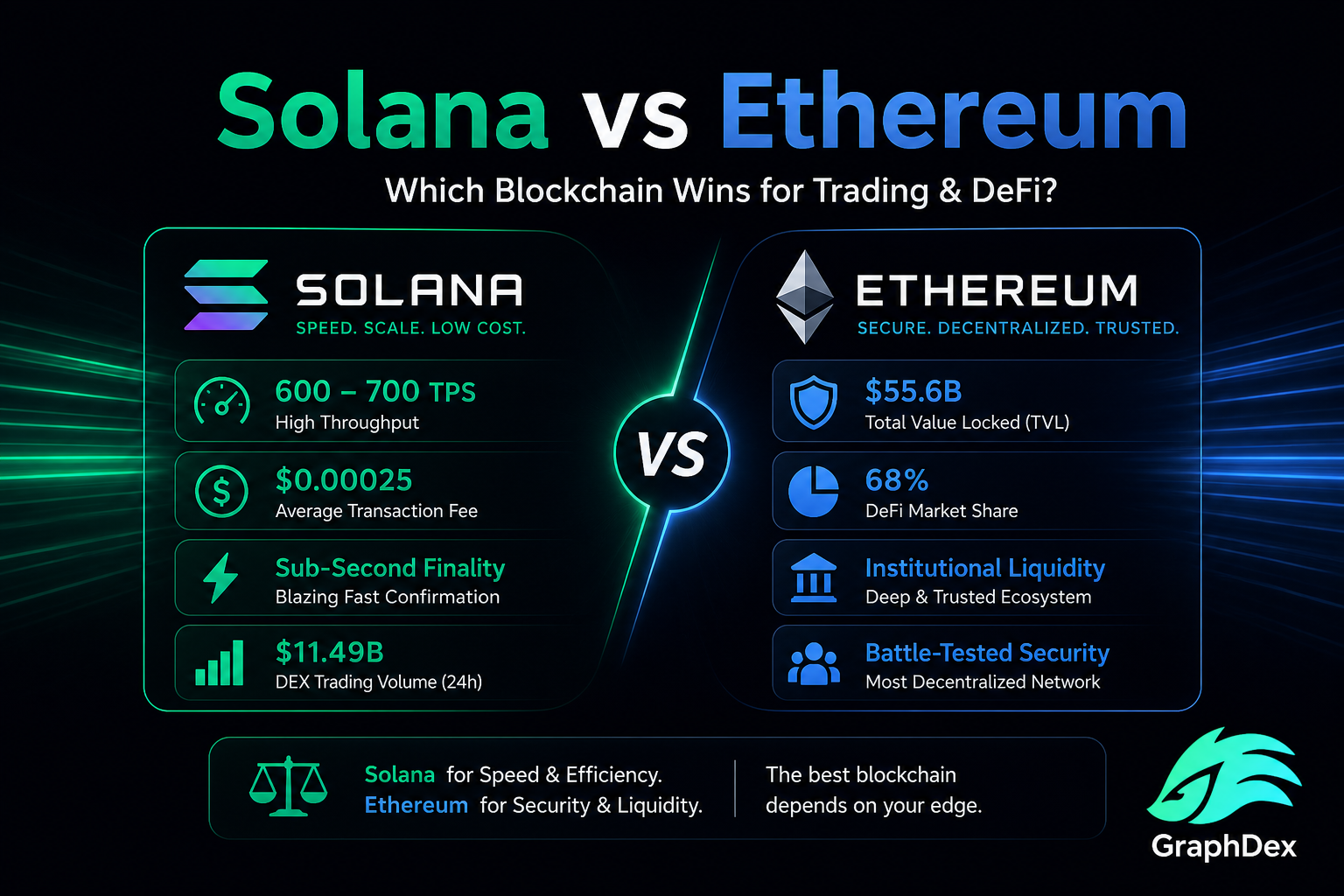
For high-frequency trading on Solana, the choice between decentralized exchanges (DEXs) and routing aggregators dictates your execution quality. While Solana’s sub-second finality provides a low-latency foundation, the specific infrastructure you connect to determines whether you capture spreads or get front-run. The landscape is dominated by two distinct approaches: direct liquidity pools and intelligent aggregation.
Jupiter: The Aggregation Standard
Jupiter is not a DEX in the traditional sense but a routing aggregator that sources liquidity from nearly every major Solana DEX, including Raydium, Orca, and Meteora. For HFT, Jupiter’s V6 API is the primary tool of choice. It offers deterministic slippage protection and the lowest possible effective rates by splitting orders across multiple venues. Its jupiter-api.com endpoints are optimized for speed, allowing bots to calculate the optimal route in milliseconds. If your strategy relies on arbitrage or tight spreads, Jupiter’s aggregation layer is essential because it prevents partial fills that can occur on single-pool venues during high volatility.
Raydium: Direct Pool Access
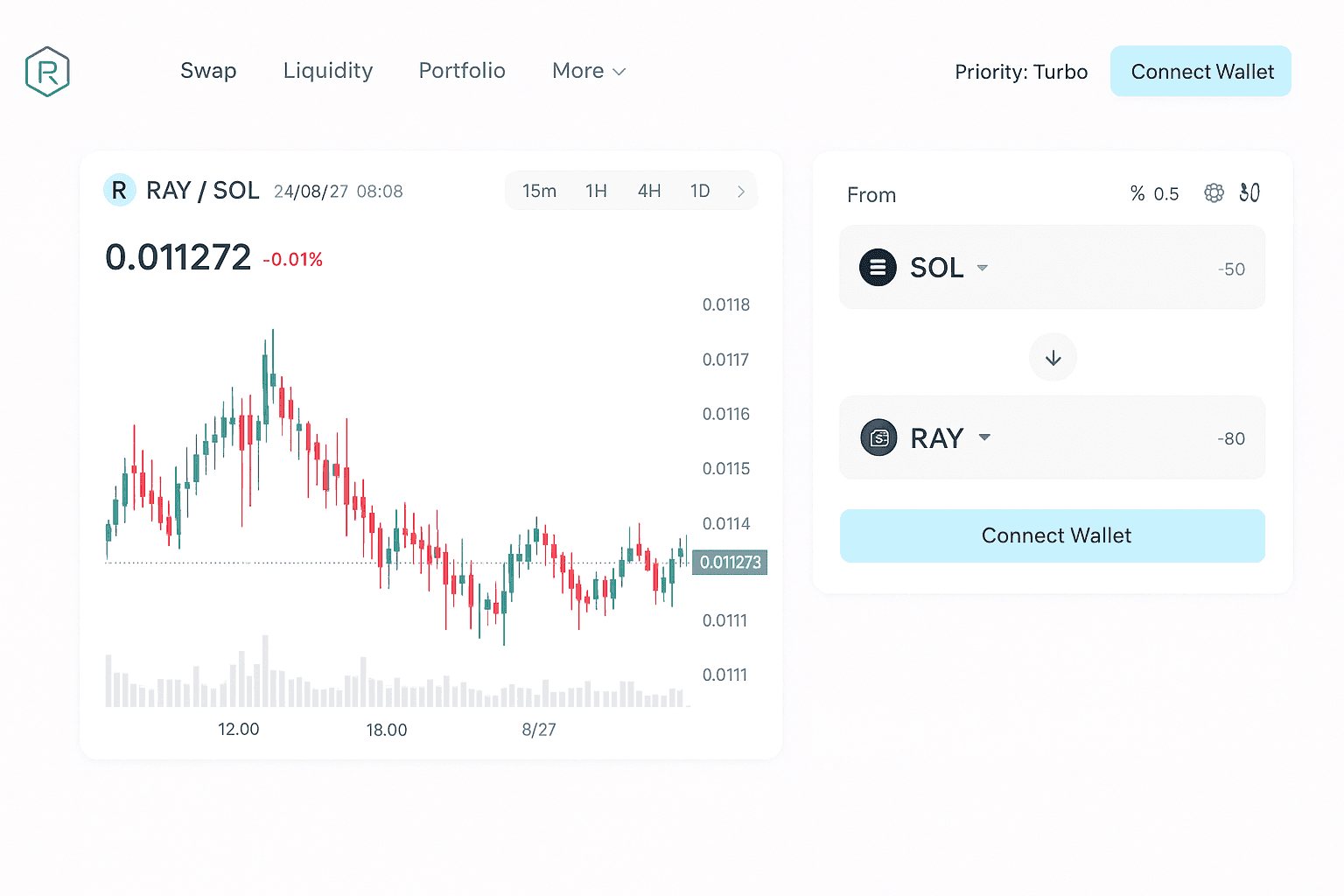
Raydium remains the largest automated market maker (AMM) on Solana, particularly for newer token launches and concentrated liquidity positions. While Jupiter routes through Raydium, some HFT strategies interact directly with Raydium’s on-chain programs to capture specific pool inefficiencies. Raydium offers deeper liquidity for major pairs like SOL/USDC but lacks the smart routing of an aggregator. Direct interaction requires managing your own slippage tolerance and gas optimization, which adds complexity but can be necessary for strategies targeting specific pool depths that aggregators might not prioritize due to their complexity.
Comparison: Latency and Cost
The table below compares the operational characteristics of these platforms for high-frequency workflows. Jupiter’s aggregation overhead is minimal but real, whereas Raydium’s direct access is faster per hop but may result in worse pricing if liquidity is fragmented.
| Platform | Type | Avg. Execution Latency | Fee Structure | HFT Suitability |
|---|---|---|---|---|
| Jupiter | Aggregator | ~100-200ms | 0.1-0.7% (split) | High (best for routes) |
| Raydium | AMM DEX | ~50-100ms | 0.2-0.3% | Medium (best for depth) |
| Orca | Concentrated AMM | ~50-100ms | 0.05-1.0% | Medium (niche pairs) |
| Meteora | DLMM DEX | ~50-100ms | 0.01-1.0% | Medium (advanced strategies) |
Infrastructure Considerations
When building your trading bot, you must account for the RPC node latency in addition to the DEX processing time. Using a dedicated, high-performance RPC provider (like Helius or Triton) is non-negotiable for HFT on Solana. Public RPCs will introduce too much variance in transaction confirmation times. Additionally, consider using Jupiter’s quote-api to pre-calculate routes before sending transactions, reducing the time your bot spends computing on-chain data. This pre-calculation step can shave critical milliseconds off your total execution cycle.
Build and test your bot
Writing the code is only the beginning. In high-frequency trading on Solana, your bot’s performance is defined by its infrastructure. A well-architected strategy fails if it cannot compete with latency or handle transaction failures. You need a development lifecycle that mirrors production, not just a local script.
Start with local simulation. Use tools like Solana Test Validator to replay mainnet blocks. This lets you test your trading logic against real market conditions without risking capital. Focus on execution speed: your bot should process incoming quotes and submit transactions in under 100 milliseconds. If your local tests show higher latency, optimize your network stack or move closer to the cluster.
Next, implement robust error handling. On-chain transactions can fail for many reasons: insufficient funds, slippage limits, or network congestion. Your bot must detect these failures instantly and adjust its strategy. Do not rely on simple retries; implement exponential backoff and circuit breakers to prevent runaway spending during volatile periods.
Finally, deploy to a testnet environment. Run your bot alongside other traders to see how it performs under real-world pressure. Monitor your transaction success rates and adjust your parameters. Once you are confident in your testnet results, you can proceed to mainnet deployment with a clear understanding of your bot’s capabilities and limitations.
Run your bot against a local Test Validator replaying recent mainnet blocks. This allows you to test execution logic and latency without risking real funds. Aim for sub-100ms processing times to remain competitive.
Build fail-safes for transaction failures, including slippage limits and network congestion. Use exponential backoff instead of simple retries to prevent runaway spending during volatile market conditions.
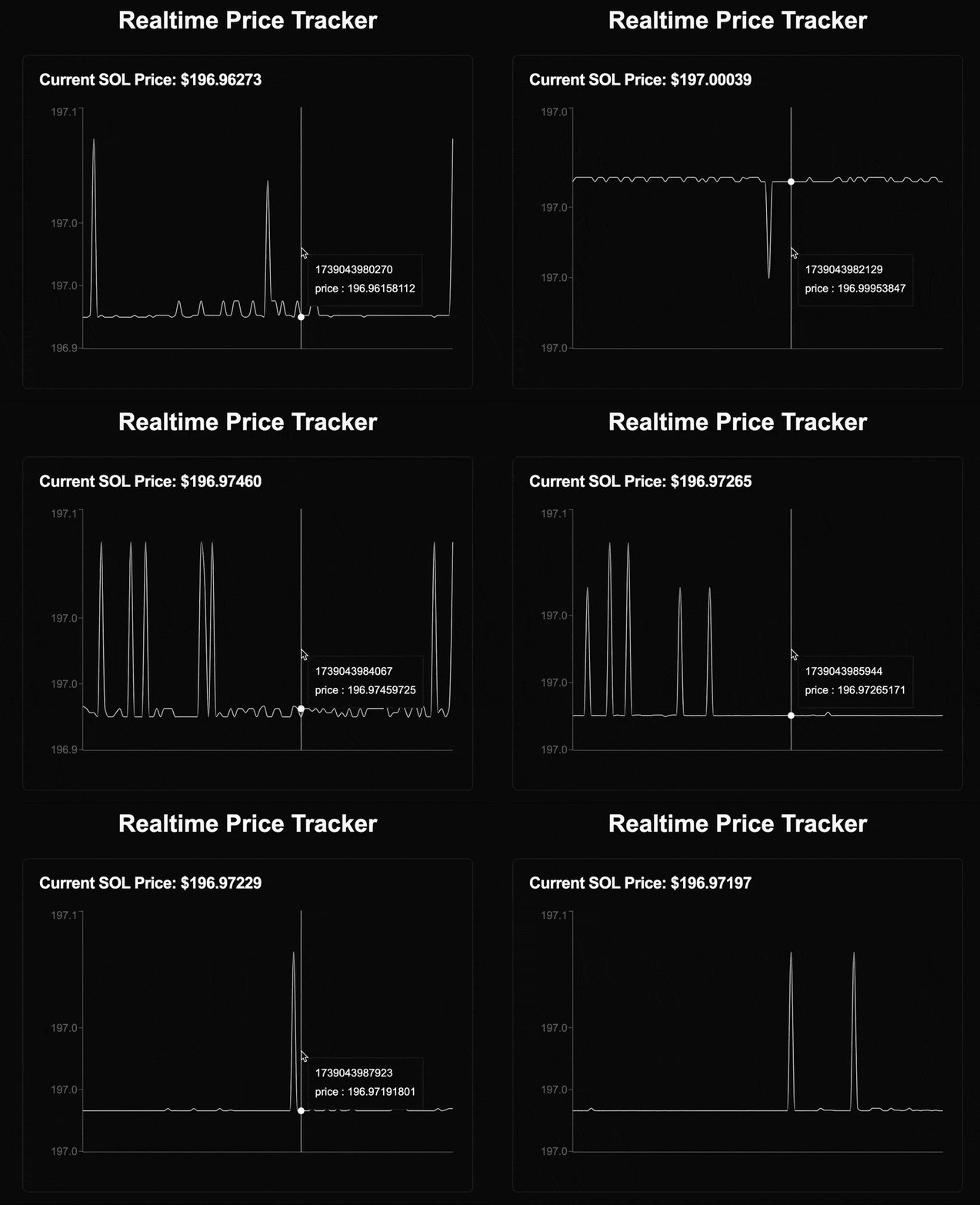
Run your bot on a testnet to monitor performance under real-world pressure. Track success rates and adjust parameters before moving to mainnet. This step validates your infrastructure and strategy in a live environment.
Hardware and Wallet Security
Running high-frequency trading on Solana demands infrastructure that balances raw speed with military-grade security. The latency advantage of HFT strategies relies on sub-millisecond execution, but protecting the keys that control those trades requires physical isolation. Software-based solutions are vulnerable to remote exploits, so hardware wallets have become the standard for securing the capital behind the algorithms.
For key storage, dedicated hardware devices like Ledger or Trezor units provide offline signing capabilities. These devices keep private keys isolated from the internet-connected trading bots, ensuring that even if a server is compromised, the funds remain secure. When setting up these devices, prioritize models with secure element chips and verified firmware sources to prevent supply-chain attacks.
Beyond the wallet itself, the physical environment matters. Use air-gapped machines for critical operations where possible, or ensure that the trading servers run on minimal, hardened operating systems with strict firewall rules. Regular security audits of the hardware setup and multi-signature requirements for large withdrawals add necessary layers of defense to your HFT operation.


As an Amazon Associate, we may earn from qualifying purchases.
No comments yet. Be the first to share your thoughts!