Why latency defines your edge
In Solana high-frequency DeFi trading, your strategy logic is secondary to your infrastructure speed. The difference between a profitable trade and a failed one often comes down to milliseconds, not alpha generation. While retail traders focus on picking the right token, institutional players and sophisticated bots compete on who can process and submit transactions first.
Solana’s architecture prioritizes throughput, but this creates a bottleneck at the transaction submission layer. When the network is busy, mempool congestion spikes, and transaction ordering becomes unpredictable. In this environment, having the fastest RPC connection or co-located servers near validator nodes provides a tangible advantage. It allows traders to bypass the public mempool delays and submit transactions directly to validators, ensuring execution at the intended price.
Latency isn’t just a technical metric; it’s your P&L. Every millisecond counts in Jito auctions and arbitrage opportunities. If you’re relying on standard public RPC endpoints, you’re already behind. The competitive edge lies in optimizing the entire stack—from network routing to transaction serialization—to ensure your trades hit the blockchain before the opportunity vanishes.
The 2026 ecosystem has seen a shift toward specialized infrastructure providers who offer low-latency RPC nodes and co-location services. These tools are no longer optional for serious traders; they are essential for surviving in a market where speed dictates profitability. Understanding and optimizing for latency is the first step in building a robust Solana HFT strategy.
Choosing the right RPC and data feed
Your edge in high-frequency trading on Solana comes down to visibility. Standard public RPCs are like trying to read a race car’s telemetry through a frosted windshield. They work for casual browsing, but for HFT, the latency and data gaps are fatal. You need direct, low-latency access to the blockchain’s raw heartbeat.
The infrastructure landscape has split into three distinct tiers. On one end, you have standard public RPCs, which are free but suffer from rate limits and delayed block processing. In the middle are managed RPC providers like Helius or Triton, which offer better reliability but still process data through intermediate layers. At the top are specialized data streams like Yellowstone gRPC and Jito ShredStream, designed specifically for sub-millisecond execution.
Yellowstone gRPC provides a gRPC-based interface to Solana’s data, allowing you to subscribe to real-time slot and block updates. This is critical for front-running or arbitrage, where milliseconds determine profit. Jito ShredStream, on the other hand, gives you direct access to the shred-level data, letting you see transactions before they are even fully validated by the network. It’s the difference between watching the race and being on the track.
Choosing the right stream depends on your strategy. If you need block-level clarity, Yellowstone is sufficient. If you need every shred to front-run, Jito is mandatory. The cost is higher, but the latency savings are worth it.
| Source | Latency | Cost | Best For |
|---|---|---|---|
| Public RPC | High (100ms+) | Free | Casual dApps |
| Managed RPC | Medium (10-50ms) | Monthly Fee | Swaps & Bots |
| Yellowstone gRPC | Low (<10ms) | High | Arbitrage |
| Jito ShredStream | Ultra-Low (<1ms) | Very High | Front-running |
Integrating Jito for MEV protection
On Solana, speed is only half the battle. The other half is ensuring your transaction actually executes at the price you see, rather than being front-run by a searcher. This is where Jito bundles come in. By submitting transactions through Jito relays, you bypass the public mempool entirely, sending your trade directly to a block builder who prioritizes it in exchange for a tip. This method provides two critical advantages for high-frequency trading: MEV protection and guaranteed block inclusion.
Step 1: Set up your Jito client
To start, you need to configure your RPC endpoint to point to a Jito-compatible node. Most professional trading setups use a dedicated Jito relay or a provider that supports Jito bundles natively. You will need to generate a fresh Keypair specifically for your bot to sign the bundle transactions. This keypair should be distinct from your main treasury wallet to limit exposure. Store the private key securely, perhaps in an encrypted environment variable, as it will be used to sign every trade you send through the Jito network.
Step 2: Construct the transaction bundle
Instead of sending a single sendTransaction call, you must package your instructions into a bundle. A bundle can contain up to four transactions, which is useful for atomic operations like swapping and providing liquidity in one go. Construct your transaction object as you normally would, but ensure you attach the necessary priority fees. Jito’s block builders will rank bundles based on the total tip offered. If your bot is trading high-volume pairs, you must calculate the current network congestion and adjust your tip accordingly to remain competitive.
Step 3: Submit the bundle to a Jito relay
Once your bundle is signed, send it to a Jito relay endpoint. The relay will validate the bundle and forward it to block builders. Unlike standard transactions, Jito bundles are "conditional"—they are only included in a block if all transactions in the bundle succeed. If any part of the bundle fails, the entire bundle is rejected, and you only lose the tip for the block that was attempted, not the full network fees for each individual failed transaction. This atomicity is vital for preventing partial fills that could leave you with unwanted exposure.
Step 4: Monitor bundle status and tips
After submission, you must track the bundle’s status. Jito provides endpoints to check if your bundle was accepted into a block. If the bundle is not included, it may have been outbid by other traders. In high-volatility markets, you might need to resubmit with a higher tip. Implement a retry mechanism with exponential backoff, but be careful not to spam the network. If the market moves against you significantly, canceling the order on the DEX side (if possible) or letting the bundle fail with a minimal tip loss is often cheaper than suffering a bad fill.
Step 5: Optimize tip strategies for volatility
MEV protection is not a set-and-forget feature; it requires active management of your tip strategy. During periods of high volatility, such as major token launches or market crashes, searchers compete aggressively for block space. Your bot should monitor the current tip rates on the Jito network and adjust its bids dynamically. A static tip will likely result in missed trades during peak times. Conversely, overpaying during calm periods eats into your margins. Use historical data from Jito’s analytics to determine the optimal tip threshold for your specific trading frequency.
Lattice Infrastructure and Co-Location
In Solana HFT, your code is only as good as the network path it travels. The distance between your bot and the validator is the silent tax that eats margins. While standard RPCs work for casual users, high-frequency strategies require direct, low-latency connectivity. This is where specialized infrastructure providers like Lattice step in, offering the physical and virtual layer necessary to compete.
Lattice provides a managed infrastructure layer that bridges the gap between custom bot development and raw hardware management. Instead of maintaining bare-metal servers across multiple regions, teams use Lattice to access optimized nodes that sit closer to the validator network. This reduces the round-trip time for transaction submission and status updates, a critical factor when competing for block space in congested slots.
Beyond connectivity, the infrastructure must handle the unique demands of Solana’s parallel execution model. Providers like MagicBlock complement this by offering ephemeral rollups that deliver sub-50ms latency and first-come-first-served sequencing. This combination of low-latency node access and predictable execution environments allows bots to react to market movements faster than those relying on public endpoints.
The competitive advantage here is not just speed, but reliability. In a market where a 10-millisecond delay can mean the difference between profit and slippage, having a dedicated, co-located infrastructure layer is no longer optional—it is the foundation of any serious Solana HFT operation.
Essential tools and DEX selection
High-frequency trading on Solana isn't just about having a better strategy; it's about having a better stack. Your infrastructure needs to be faster than the block time itself. In 2026, the gap between profitable HFT and broken capital is defined by your choice of decentralized exchange (DEX) aggregators, wallet security, and execution hardware.
DEX Aggregators: Jupiter and Orca
You don't trade directly on a single liquidity pool in HFT; you route through aggregators that split orders across multiple venues to minimize slippage. Jupiter remains the dominant aggregator on Solana, offering the deepest liquidity access and advanced limit order functionality. For strategies relying on specific AMM curves, Orca provides a concentrated liquidity model that can offer tighter spreads for certain token pairs.
Choosing the right aggregator is like choosing your broker. You need one that offers the lowest latency and the most reliable API. Jupiter's v6 API is built for speed, handling complex routing in milliseconds. Orca's Whirlpool interface is ideal for strategies that benefit from concentrated liquidity ranges. Test both APIs with your bot's logic before committing capital.
Hardware and Node Infrastructure
Standard consumer hardware cannot keep up with Solana's 400ms block times. You need a dedicated node or a premium RPC provider that guarantees block inclusion. Running your own validator node is the gold standard for HFT, as it gives you direct access to the mempool and the ability to front-run or arbitrage opportunities before they hit the public chain.
If running a validator isn't feasible, a high-performance computing setup with a dedicated GPU for transaction signing and a low-latency network connection to the nearest Solana cluster region is mandatory. The hardware you use directly impacts your transaction success rate. A lagging node means missed opportunities and failed trades, which can quickly erode profits.
Wallet Security and Key Management
Your trading bot needs a wallet with sufficient SOL for gas fees and trading capital, but it must be isolated from your main holdings. Use a hardware wallet like a Ledger or Trezor for cold storage of long-term assets, and a software wallet with strict key management for active trading. Never store your private keys in plain text or share them with unverified third-party services.
For active HFT, consider using a multi-signature wallet or a custom-built wallet that allows for automated transaction signing with strict rate limits. This adds a layer of security while maintaining the speed required for high-frequency strategies. Always test your wallet setup with small amounts before scaling up.
Live Market Context
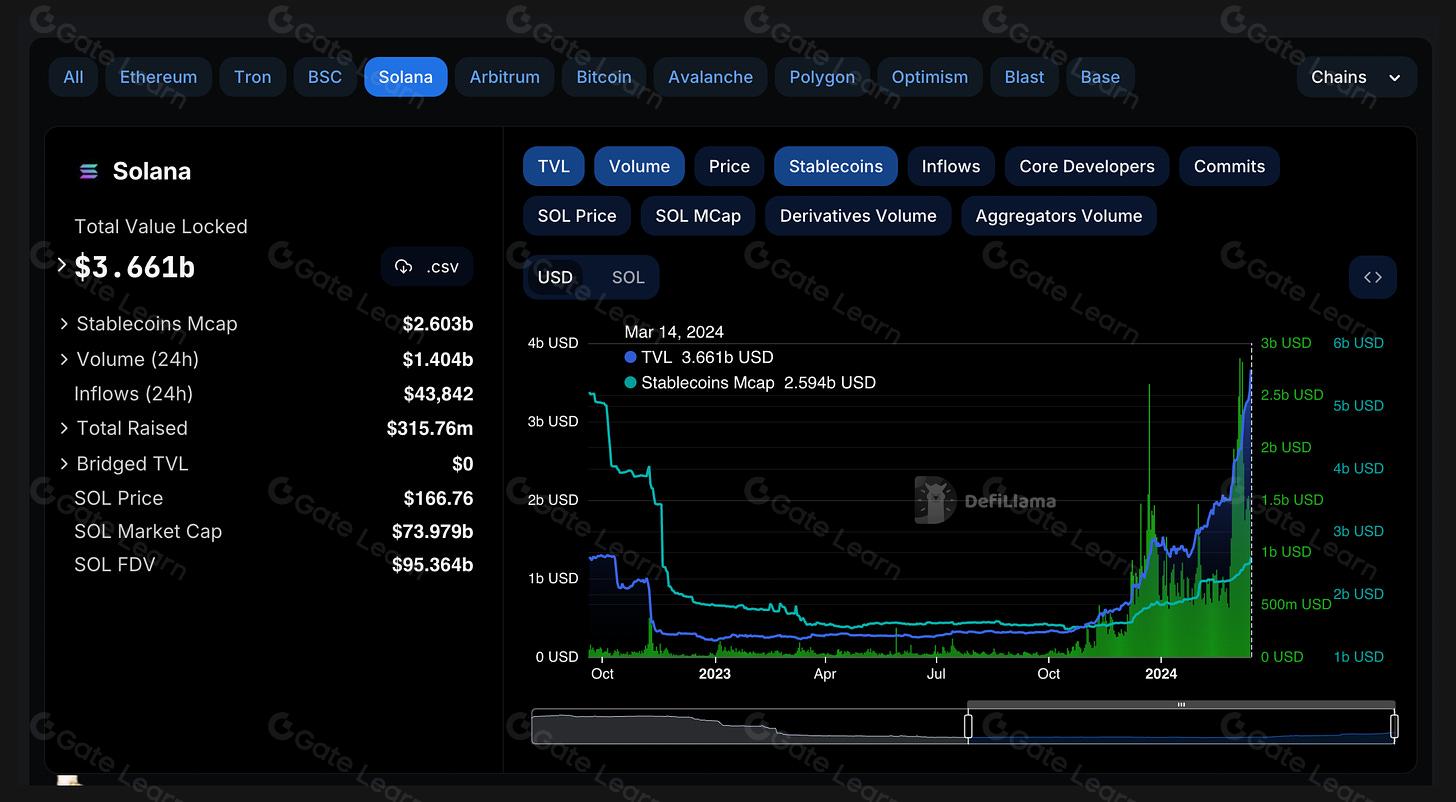
Understanding the current market conditions is crucial for adjusting your trading parameters. Solana's price volatility directly impacts liquidity and slippage.
Visualizing the Infrastructure
The physical and digital infrastructure behind HFT on Solana is complex. It requires a deep understanding of both the software and the hardware layers.
Recommended Hardware
Investing in the right hardware is critical for HFT. Here are some tools that can help you get started.


As an Amazon Associate, we may earn from qualifying purchases.
Common solana defi strategy: what to check next
Understanding how high-frequency trading (HFT) fits into the broader Solana ecosystem requires looking beyond simple yield farming. The infrastructure advantages of Solana—specifically its sub-second block times and low transaction costs—enable strategies that are either impossible or prohibitively expensive on slower chains.
No comments yet. Be the first to share your thoughts!