Why Solana fits high-frequency trading
High-frequency trading (HFT) demands infrastructure that can process thousands of transactions per second with minimal latency. Solana’s architecture, anchored by Proof of History (PoH), provides this foundation by timestamping transactions before they are processed by validators. This mechanism allows the network to maintain high throughput without the bottlenecks that plague older blockchains, settling DeFi operations in milliseconds.
For HFT strategies, speed is only half the equation; cost is the other. Traditional networks often see transaction fees spike during high volatility, eroding the thin margins typical of HFT. Solana’s fee structure remains predictably low, often fractions of a cent per swap. This economic predictability allows traders to deploy strategies that rely on high-volume, low-margin arbitrage or market-making without worrying about fee spikes turning profitable trades into losses.
The network’s validator rotation and parallel processing capabilities further support HFT by reducing the risk of network congestion. When the market moves fast, Solana’s ability to process transactions in parallel ensures that order execution remains consistent. This reliability is critical for automated trading bots that require deterministic outcomes to manage risk effectively.
Understanding the live market context is essential for any HFT strategy. Below is the current price action for Solana, reflecting the real-time conditions these systems operate in.
Core infrastructure layers for low latency
High-frequency trading on Solana isn't just about writing good code; it's about fighting physics. The network rotates validators every ~400 milliseconds, creating a narrow window to submit, propagate, and include a transaction. If your infrastructure is built on standard cloud instances or public RPC endpoints, you are already behind. To compete, you need to minimize every microsecond between your signal and the ledger.
Validator Proximity and Network Topology
Your first line of defense is physical distance. Solana's consensus mechanism relies on rapid validator rotation, meaning latency is the primary enemy of profitability. Running your bots in data centers near major Solana validator clusters reduces propagation time significantly. This isn't just about having a fast server; it's about being in the right room. If you are trading memecoins or arbitrage opportunities, a 50ms delay can mean the difference between a profitable fill and a failed transaction.
RPC Node Architecture
Standard public RPC nodes are throttled and shared, making them useless for HFT. You need dedicated RPC infrastructure that prioritizes your transactions. This involves using private RPC endpoints that offer higher throughput limits and lower latency. Some traders opt for self-hosted RPC nodes to have complete control over the node configuration, ensuring that their transactions are processed with minimal overhead. The goal is to bypass the congestion that affects retail users during high-volume periods.
Transaction Optimization
Once your infrastructure is in place, you must optimize the transaction itself. This includes using priority fees strategically to incentivize validators to include your transaction in the next block. It also involves optimizing your transaction serialization and deserialization to reduce CPU usage. Every byte and millisecond counts. Tools like Jito bundles can help you bypass the standard mempool, offering a more direct path to inclusion, though this adds complexity to your stack.
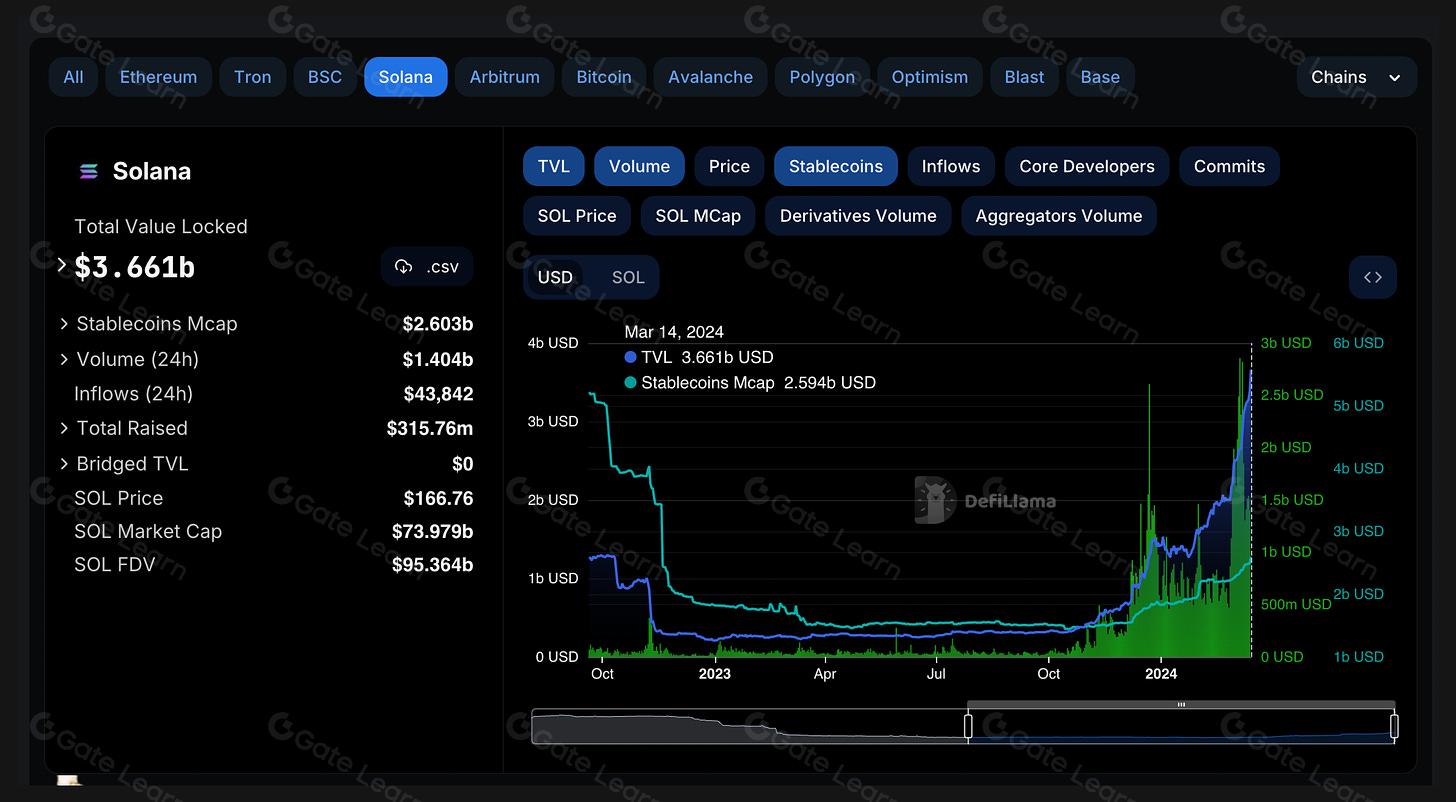
Visualizing Market Volatility
Understanding the market context is just as important as your infrastructure. Solana can experience rapid price swings, and your bots need to react in real-time. A technical chart helps visualize these movements, allowing you to backtest your strategies against historical volatility.
Essential tools for Solana bot development
Building a trading bot on Solana means choosing between writing custom code or leveraging a no-code automation platform. The right choice depends on your latency requirements, technical comfort, and budget. Below is a comparison of the most common infrastructure options.
| Option | Latency | Cost Structure | Flexibility |
|---|---|---|---|
| Custom Rust/Python | Lowest (direct RPC) | Dev time + RPC fees | Unlimited |
| No-Code Platforms | Moderate (relay latency) | Monthly subscription | Template-based |
| Open-Source Frameworks | Low-Moderate | Dev time + Hosting | High (community-driven) |
Custom Code vs. No-Code Platforms
Custom development in Rust or Python offers the lowest latency, which is critical for high-frequency strategies. You control every aspect of the execution logic, from transaction serialization to private RPC endpoints. However, this requires significant engineering resources and ongoing maintenance.
No-code platforms like Coinrule abstract the complexity by providing visual strategy builders. They handle the infrastructure, including node reliability and transaction broadcasting. While convenient, these services introduce relay latency and limit you to predefined logic templates. Higher-tier plans often use the high-frequency capabilities needed for competitive arbitrage.
Open-Source Frameworks
For developers who want more control than no-code platforms but less overhead than building from scratch, open-source frameworks like Jupiter’s Jito bundles or Raydium’s SDKs are popular. These tools provide battle-tested code for common DeFi interactions, allowing you to focus on strategy rather than infrastructure.
Choosing the Right DEX for High-Frequency Trading
Selecting a decentralized exchange isn’t just about brand recognition; it’s about infrastructure resilience. For high-frequency trading (HFT), your execution speed and cost are determined by the liquidity depth and routing efficiency of the DEX. You need platforms that support parallelized transactions and offer low slippage even during peak congestion.
Liquidity Depth and Slippage
Liquidity is the lifeblood of HFT. Thin order books or fragmented liquidity pools lead to significant slippage, which can erase profit margins in milliseconds. Prioritize DEXs with deep pools for your target assets. Phantom and Jupiter often aggregate liquidity across multiple sources, reducing the impact of single-pool volatility. Always test your trade sizes against current pool depths before deploying bots.
MEV Resistance and Transaction Ordering
Maximal Extractable Value (MEV) bots can front-run your transactions, stealing value. HFT strategies are particularly vulnerable because they rely on speed and predictability. Choose DEXs and routing protocols that offer MEV-resistant features or integrate with privacy-preserving transaction ordering services. This ensures your trades execute at the price you see, not a manipulated one.
Technical Infrastructure Compatibility
Your trading bot must integrate seamlessly with the DEX’s smart contracts. Look for platforms with robust, well-documented APIs and SDKs. Solana’s parallelized architecture allows for high throughput, but only if your infrastructure is optimized for it. Use provider-backed tools to monitor real-time network conditions and DEX performance metrics.
Data-Driven Selection
Don’t rely on static rankings. Use data to compare DEX performance over time. Analyze historical slippage, transaction success rates, and fee structures. Tools like Solscan or block explorers can provide insights into which DEXs are handling the most volume reliably. This data helps you build a diversified execution strategy across multiple platforms.
Risk Management and Compliance in HFT
High-frequency trading on Solana moves at the speed of light, but your risk management needs to move faster. The infrastructure that powers your execution engine is only as good as the safeguards you build around it. Without strict controls, a single logic error or network spike can drain a wallet in milliseconds.
Protecting Your Execution
The most immediate threat in Solana DeFi is MEV (Maximal Extractable Value). Bots scanning the mempool can front-run or sandwich your trades, turning potential profit into immediate loss. To mitigate this, you must route transactions through protected endpoints that offer private transaction submission. Services like Jito or specialized RPC providers with MEV-boost integration scramble your transaction order, making it nearly impossible for attackers to predict or intercept your moves. This isn't just a feature; it's a necessity for any serious HFT operation.
Compliance and Legal Realities
While the technology is decentralized, the legal landscape is not. Automated trading bots operate under the same regulatory frameworks as traditional HFT in centralized markets. In the US, the SEC and CFTC scrutinize algorithmic trading for market manipulation, spoofing, and wash trading. Even on Solana, if your bot engages in coordinated activity to artificially inflate volume or price, you are liable under existing securities laws.
It is crucial to understand that "decentralized" does not mean "unregulated." Many jurisdictions now require registration for algorithmic trading firms, especially if you are managing external capital. Before deploying capital, consult with legal counsel specializing in digital assets. The cost of compliance is far lower than the cost of a regulatory shutdown.
Monitoring and Kill Switches
Your infrastructure needs a nervous system. Implement real-time monitoring that tracks PnL, latency, and error rates. More importantly, build in hard kill switches. If your bot deviates from expected behavior—such as placing orders outside a defined price band or exceeding a maximum daily loss limit—the system should automatically halt execution. This manual override capability is your last line of defense against runaway algorithms.
Frequently asked questions about Solana HFT
Are HFT bots profitable? Profitability is not guaranteed and depends on your infrastructure edge. Solana’s validator rotation happens every ~400 milliseconds, creating a narrow window to submit, propagate, and include transactions. Without optimized RPC nodes and low-latency code, slippage and failed transactions will erase margins.
Is HFT trading illegal? High-frequency trading is generally legal on decentralized exchanges (DEXs) and most centralized exchanges (CEXs), provided you comply with local securities laws and exchange terms of service. However, certain strategies like front-running or market manipulation are strictly prohibited and can result in account bans or legal action.
Which broker allows HFT trading? Most traditional brokers do not support HFT due to regulatory and infrastructure constraints. For Solana, you typically need specialized trading platforms or bot-as-a-service providers (like Coinrule or custom-built bots) that offer API access, high-rate limits, and support for rapid order execution across Solana DEXs.
Will Solana hit $10,000? Price predictions are speculative and highly volatile. While Solana’s speed and low costs make it attractive for DeFi, its price is driven by market sentiment, adoption, and macroeconomic factors. No one can reliably predict long-term price targets, and you should never trade based on price speculation alone.
Helpful gear
Use these product recommendations as a starting point, then choose the size, material, and price point that fit how you actually use the gear.

As an Amazon Associate, we may earn from qualifying purchases.
No comments yet. Be the first to share your thoughts!